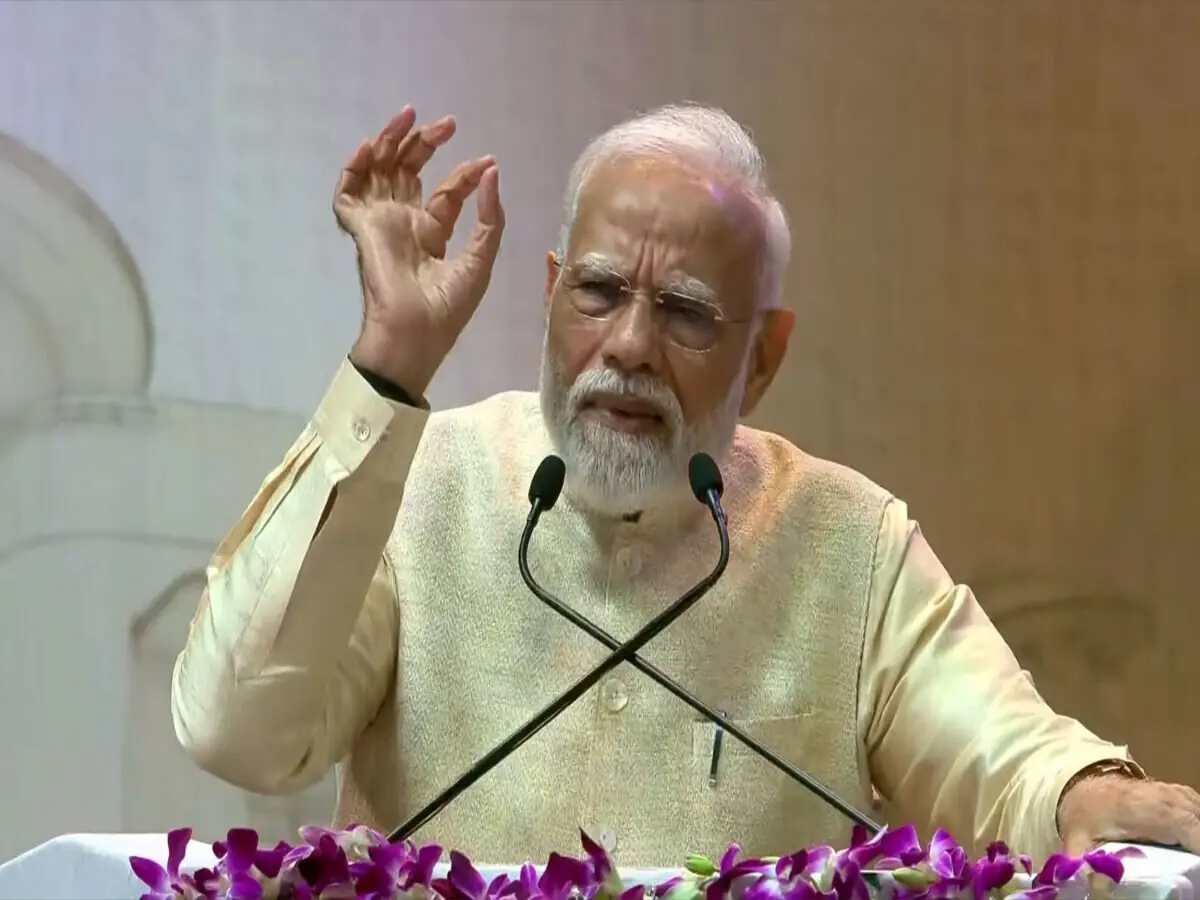





Prime Minister Narendra Modi called on the Union Public Service Commission (UPSC) to implement ongoing reforms in its examination and recruitment procedures, emphasising the direct impact of examinations on the futures of young aspirants and warning that delays can cause significant difficulties.Addressing the UPSC centenary celebrations at Bharat Mandapam in New Delhi on October 1, PM Modi stated that examination bodies must adapt to the evolving needs of the country and uphold the principle of “time certainty.” He remarked, “An examination should not be considered just an event. It is related to the future of our youth. A delay of even a few months can create difficulties for the youth. Therefore, the examination system should follow the principle of time certainty.”Commemorating 100 years of UPSC’s legacy, the Prime Minister highlighted the institution’s enduring trust among millions of young Indians. “Today’s occasion marks 100 years of the UPSC, while also celebrating a grand legacy. This celebration represents the aspirations lived by lakhs of young people every single year. This celebration reflects the trust that every Indian places in this institution,” he said.PM Modi noted that despite changes in generations, governments, technology, and syllabi over the century, public confidence in the UPSC remains strong, calling it a substantial asset. He underscored the upcoming 20 to 25 years as critical for India’s development and the role of UPSC and State Public Service Commissions in recruiting youth who will be pivotal in building a developed nation.He urged that recruitment should be guided by two key benchmarks: “Nation First” and “Citizen First,” asserting, “These are the two criteria on which every selection must be tested.”Furthermore, PM Modi called for examinations to evaluate candidates not only on academic knowledge but also on their motivation to enter public service. “We need to bring young people into public service who are attracted to public service, not just the public office. Hence, it is essential that the recruitment exam does not merely assess how much a candidate knows, but also looks into why the youth wants to join the civil services,” he said.He highlighted that the expectations of citizens are shifting and require a transformation in civil service functioning. “The India of 2047 will be very different from today’s India. Compared to today, India will be more urban, and the gap between villages and cities will shrink. The aspirations and expectations of our citizens, especially the youth, will be far greater,” he said. He added that public services must match the speed of today’s instant-delivery world.Technological progress, such as artificial intelligence’s capacity to process vast documents swiftly and governments’ access to real-time data, is raising public expectations for rapid solutions. “This changing mindset demands a new transformation from our civil services as well,” PM Modi remarked.Emphasising a citizen-centric approach, he contrasted past government perceptions with the present mantra of “Nagrik Devo Bhava” (the citizen is divine), stressing the primacy of service. He described the desired working culture for modern India as “Pro-People, Proactive, Good Governance,” advocating for civil servants who combine empathy, innovation, and effective implementation.Highlighting the importance of continuous capacity building, PM Modi suggested using the iGOT platform under Mission Karmayogi to strengthen UPSC and State Public Service Commissions’ internal capabilities.Regarding the broadening of participation in public services, the Prime Minister noted that opportunities have expanded beyond major cities and affluent families. “When UPSC was established, opportunities were mostly accessible to youth from big cities, affluent families, and top institutions. But today, youth from villages and small towns are also reaching public services. The participation of our daughters is also continuously increasing,” he said.He cited that women candidates’ representation has grown from 3% in 1952 to over 30% today. Additionally, the number of UPSC exam takers has increased more than 45-fold since 1976, when the commission completed 50 years.Underlining the UPSC’s responsibility, PM Modi stated, “You are not just selecting a candidate; you are selecting a person who will go on to become a representative of the government. At the ground level, people will consider that person as the government itself. Therefore, all of you carry an immense responsibility to select the right person.” He also called for preserving the Commission’s core values of independence, impartiality, merit, confidentiality, and fair process.As part of the centenary celebrations titled ‘Manthan,’ the Prime Minister launched a commemorative postage stamp and coin. The two-day event brings together senior public officials and experts to discuss the evolving role of civil services, public administration, technology, and institutional reforms.
PM Modi urges UPSC to ensure time certainty and recruitment reform