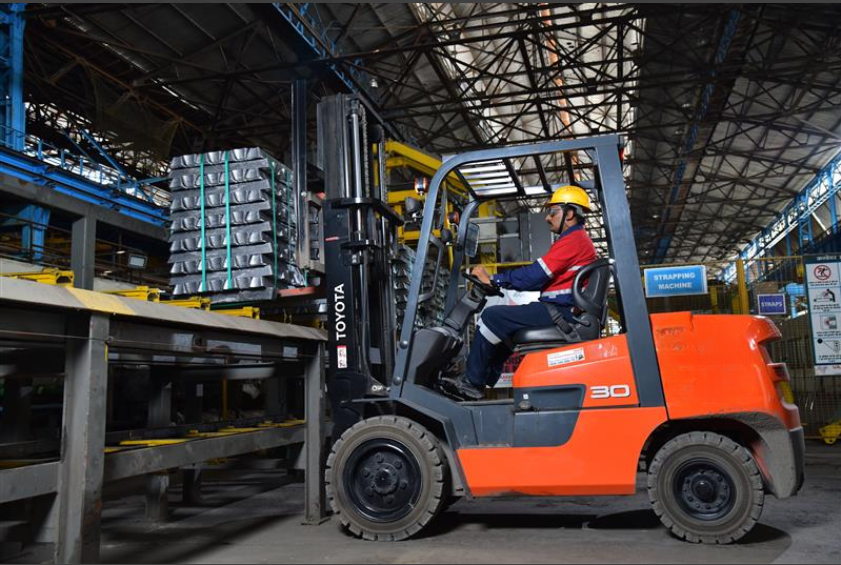






Bhubaneswar: Across India, a quiet transformation is reshaping the way people and goods move. As the country pursues its vision of Viksit Bharat, industries are increasingly focusing on innovation, sustainability and manufacturing excellence. The mobility sector lies at the heart of this shift, creating new opportunities for economic growth while accelerating the transition to cleaner transportation systems. Among the many changes driving this evolution, the rapid rise of electric vehicles (EVs) is redefining the future of mobility and strengthening India's ambitions of building a globally competitive and future-ready economy. As electric mobility gains momentum, the conversation is expanding beyond vehicles to the ecosystem that powers them. From battery technologies and charging infrastructure to advanced materials, every element plays a critical role in shaping the next generation of transportation. Among these, aluminium has emerged as one of the most important enablers, helping manufacturers strike a balance between performance, efficiency and sustainability. Its lightweight yet durable nature makes it particularly well-suited for electric vehicles, where reducing weight can improve energy efficiency and extend driving range. As a result, aluminium is increasingly becoming a key building block of modern mobility solutions. As India's largest producer of aluminium, Vedanta Aluminium is playing a key role in supporting this transition, supplying high-quality aluminium products that serve a wide range of mobility and manufacturing applications. Speaking on the evolving opportunities in the mobility sector, Rajesh Kumar, CEO, Vedanta Aluminium, said, "The shift to electric mobility becomes truly transformative when it creates value across the entire chain, from how industries operate to how vehicles are designed. At Vedanta Aluminium, we are reducing dependence on conventional fuels within our operations while also developing advanced materials that enable automobile manufacturers to build lighter, more efficient and future-ready vehicles. Together, these interventions strengthen both the economic and environmental case for switching electric." This philosophy is reflected in the company's own operations. Across its facilities in Odisha and Chhattisgarh, Vedanta Aluminium has deployed 156 lithium-ion battery-powered electric forklifts, making it India's largest industrial deployment of its kind. At Jharsuguda
alone, where 119 electric forklifts are currently operational, the initiative is estimated to avoid approximately 5,100 tonnes of CO₂-equivalent emissions annually while saving nearly 19.4 lakh litres of diesel each year. Beyond material movement, the company is progressively increasing the use of electric vehicles across its operating locations and townships while encouraging employees to adopt EVs through dedicated mobility incentives and policies. While operational adoption represents one dimension of Vedanta Aluminium's EV journey, the second lies in the material itself. As electric mobility gains momentum, aluminium is becoming increasingly important to vehicle design because of its strength, durability, conductivity and recyclability. Most importantly, its lightweight properties help improve vehicle efficiency and offset the additional weight of battery systems, making it a critical material for modern electric vehicles. Recognising this opportunity, Vedanta Aluminium continues to expand its portfolio of value- added products for the automotive sector. At AutoEdge 2026, the company's exclusive automotive industry conclave, it unveiled two advanced Primary Foundry Alloy (PFA) solutions designed to meet evolving mobility requirements. Its newly developed Copper- Doped Alloy offers enhanced durability, wear resistance and high-temperature performance for demanding automotive applications. Meanwhile, the Vedanta Foundry Alloy (VFA), developed in collaboration with IIT Delhi, combines lightweighting, enhanced strength, corrosion resistance and improved casting performance, making it suitable for both conventional and electric vehicles. These innovations add to Vedanta Aluminium's growing automotive portfolio spanning alloy wheels, cylinder heads, engine components, automotive castings and specialised billets. With a 380 KTPA Primary Foundry Alloy capacity, the company is India's largest PFA producer and is poised to become the world's largest primary billet producer with a capacity of 1.25 MTPA following the ongoing expansion at BALCO. As India accelerates its journey towards cleaner transportation, the focus is increasingly shifting from individual technologies to the broader ecosystem that enables them. By combining electric mobility within its own operations with advanced material solutions for the automotive industry, Vedanta Aluminium is helping strengthen India's EV value chain while contributing to the larger goals of sustainable manufacturing, industrial competitiveness and Viksit Bharat.
Driving India’s EV Transition: How Vedanta Aluminium is Powering the Future of Mobility