




RAYAGADA, November 14: The conspicuous display of Telugu-language signboards across commercial establishments in Kerada, a border settlement barely 25 km from Rayagada town towards Andhra Pradesh, has raised questions over the enforcement of Odisha’s statutory requirement for prominent display of Odia on commercial signboards.
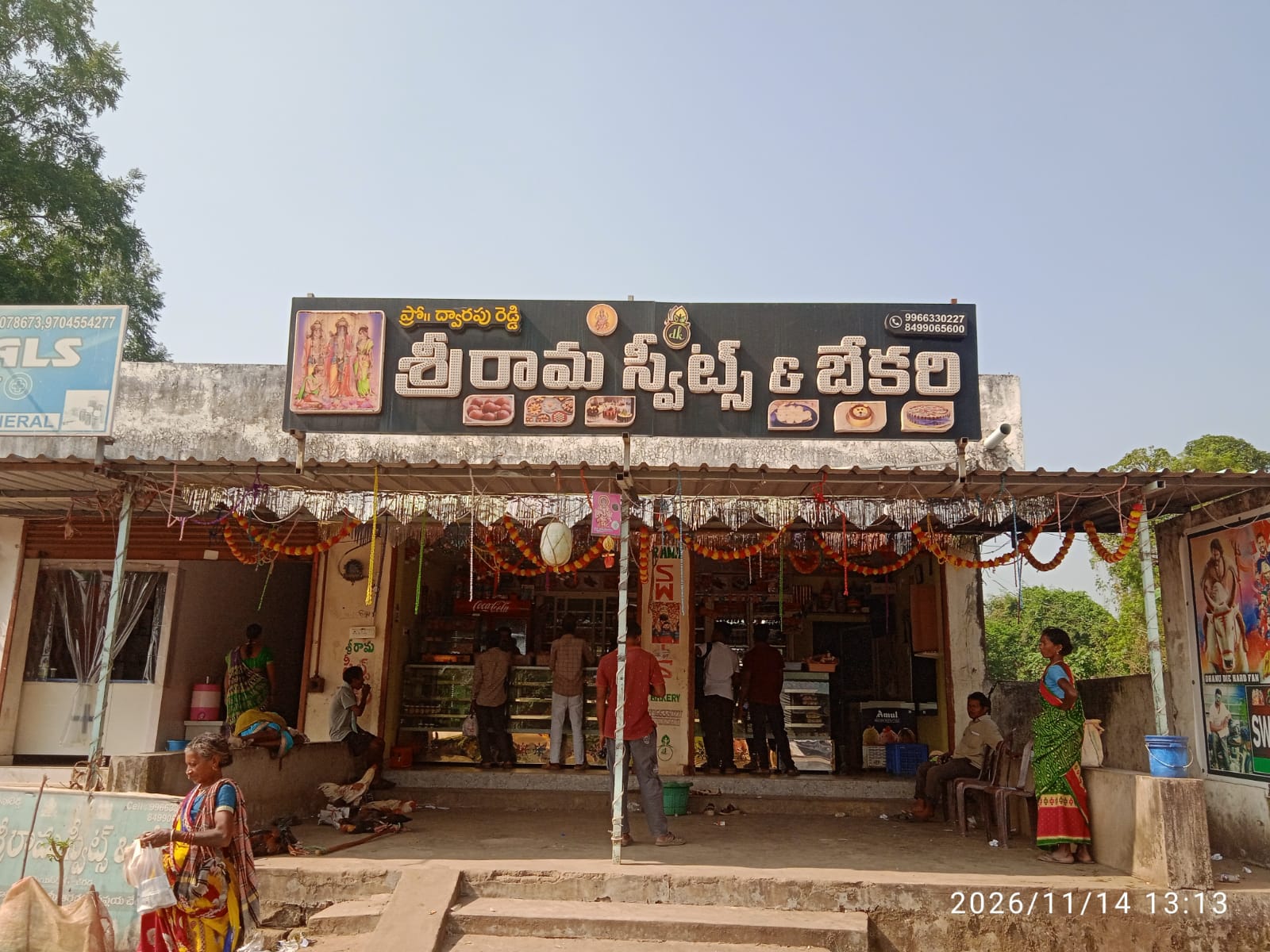
A visit to Kerada on Saturday revealed several commercial establishments carrying signboards predominantly in Telugu. A photograph taken at one such establishment shows its principal nameboard prominently displaying Telugu lettering, with no visible Odia inscription. The situation raises questions about the extent of administrative monitoring in a border region where the state’s institutional presence and linguistic identity assume particular significance.
The issue acquires added relevance against the backdrop of the long-standing Kotia territorial dispute between Odisha and Andhra Pradesh. While the use of Telugu by traders cannot, by itself, be construed as a territorial claim or an indication of allegiance, the absence of Odia from prominent commercial signboards in an Odisha border settlement raises concerns over the implementation of the state’s own language policy.
The legal requirement is unambiguous. On August 6, 2025, the Housing and Urban Development Department issued a directive requiring shops and commercial establishments under municipal corporations, municipalities and Notified Area Councils to ensure that Odia script occupies at least 60 per cent of their signboard area. The directive also provided for inspections, notices and penalties for continued non-compliance.
More significantly, the State Government subsequently incorporated the requirement into law through Section 4A of the Odisha Shops and Commercial Establishments Act, 1956. First introduced through an amendment ordinance promulgated on November 5, 2025, and published in the Odisha Gazette on November 8, the provision was subsequently enacted as the Odisha Shops and Commercial Establishments (Amendment) Act, 2025, published on January 16, 2026, with effect from November 8, 2025.
Section 4A expressly mandates that the name of every establishment, irrespective of the number of employees, must be displayed prominently in Odia on a signboard in front of the premises, alongside any other language used.
The provision makes it clear that the use of Telugu or any other language is not prohibited; rather, Odia must receive its mandated prominence. Its implementation, therefore, cannot be left to the discretion of individual establishments.
The situation in Kerada raises a pertinent question about the district administration’s enforcement machinery. Has any systematic inspection been undertaken to ascertain compliance with the statutory provision in the border settlements? Are commercial establishments being made aware of the requirement, and is the concerned enforcement machinery ensuring its implementation?
In a district where the Kotia dispute has repeatedly highlighted the importance of sustained administrative engagement in border areas, enforcement of a basic state law should not be overlooked.
The visibility of Odia in public spaces cannot remain confined to government notifications and policy declarations. It must be reflected in everyday administrative practice, including in settlements along the state’s territorial boundaries.
Kerada thus presents a test of administrative vigilance: whether a statutory obligation intended to protect the prominence of Odia is being enforced on the ground, or remains largely on paper.