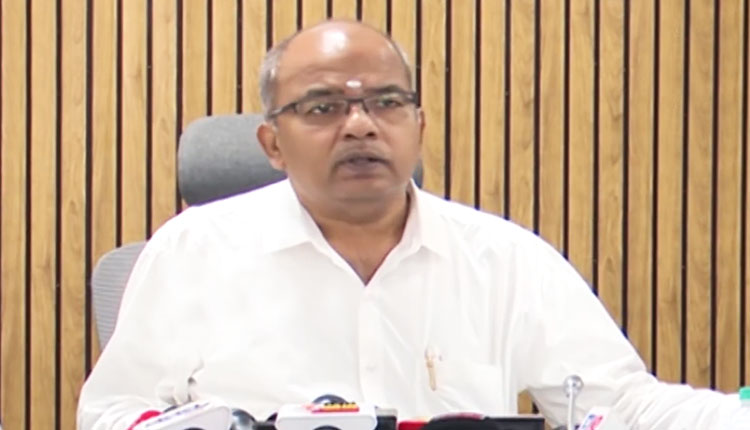






Bhubaneswar: As many as 58.36 lakh voters in Odisha have been identified for verification under the Special Intensive Revision (SIR) of the electoral roll, with the Election Commission of India (ECI) stepping up the process to ensure an accurate and error-free voters’ list, Chief Electoral Officer (CEO) R. S. Gopalan said on Tuesday.The CEO said the SIR exercise has entered its second phase after the publication of the draft electoral roll on July 5, 2026. The period for filing claims, objections and corrections will continue till August 4, 2026, during which eligible voters can submit applications through Forms 6, 6A, 7 and 8.Addressing the media, Gopalan said 20,12,577 names have been deleted from Odisha’s draft electoral roll following the intensive revision exercise, bringing down the total number of electors in the draft list to around 3.13 crore.“Out of the 58,36,341 electors identified for verification, around 12 lakh voters could not be mapped as their details were not available in the 2002 electoral roll. Another 46 lakh electors have discrepancies in their SIR forms, which require correction and verification,” Gopalan said.He said notices have been generated for the identified electors and distribution is currently underway.“Almost all notices have been printed and the hearing process has already started,” he added.The CEO appealed to voters to cooperate with the verification process and submit the required documents to the Booth Level Officers (BLOs) after receiving notices.“Once the voter submits all required documents to the BLO, there will generally be no need for the elector to appear personally during the hearing,” Gopalan said.To ensure that vulnerable groups are not inconvenienced, special arrangements have been made for senior citizens, Persons with Disabilities (PwDs), sick and infirm persons, and residents of remote areas.“Such electors will generally not be required to appear personally. BLOs will collect the necessary documents from their residences to make the process convenient and accessible,” the CEO said.He added that Assistant Electoral Registration Officers (AEROs) are issuing notices to electors whose details do not match the records available in the 2002 electoral roll or contain discrepancies.The concerned electors have been advised to appear before the AEROs on the scheduled dates along with documents approved by the Election Commission to support their claims. Where possible, hearings will also be conducted through video conferencing.Sharing the progress of the SIR exercise, Gopalan said Odisha currently has 147 Electoral Registration Officers (EROs) and 994 AEROs managing the verification process. The state is also in the process of appointing around 400 additional AEROs.He said 45,250 Booth Level Officers (BLOs) are currently engaged across Odisha for the revision exercise.Since the publication of the draft roll on July 5, the Election Commission has received 26,745 applications under Form-6, around 22,000 applications under Form-8, and 2,187 applications under Form-7.Of the total 58,36,341 notices proposed to be issued, 57,98,889 notices have already been generated. Around 7,93,490 notices have been delivered, while 50,05,399 notices are pending delivery.“So far, 1,42,111 hearings have been conducted as part of the verification process,” Gopalan said.The CEO urged citizens to verify their names and other particulars in the draft electoral roll and submit claims, objections or correction requests through their respective BLOs, the Voters’ Service Portal or the ECI NET App within the stipulated period.The Electoral Registration Officers (EROs) will decide the eligibility of electors based on the documents submitted during the verification process.The final electoral roll is scheduled to be published on September 6, 2026.The Chief Electoral Officer’s office appealed to all eligible citizens to actively participate in the revision exercise, stating that public cooperation is crucial for preparing a clean, inclusive and error-free electoral roll, which is the foundation of a strong democratic system.
58.36 Lakh Odisha Voters Get SIR Notices As ECI Begins Intensive Verification Drive