



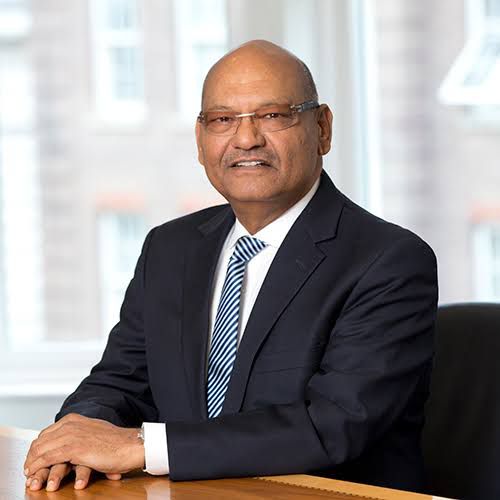
New Delhi : Vedanta Ltd. Chairman Anil Agarwal said that he envisions that each of the demerged
companies has the potential to grow into a $100 billion company. In a letter to shareholders,
Agarwal reaffirmed the company’s commitment to unlocking value and driving India’s
natural resources sector. Vedanta’s proposed demerger will create four independent natural
resource-focused entities with management structures, capital frameworks, and strategic
priorities.
Agarwal highlighted the need for pure-play businesses and how the proposed demerger will
help Vedanta achieve this. He emphasized that stakeholders will directly benefit from the
company’s proposed move while Vedanta's unique and irreplaceable assets, sector-leading
position and financial discipline will ensure a stronger growth trajectory and higher return.
“I envision that each of the demerged companies has the potential to grow into a $100 billion
company. If you look at where we are headed as a global economy and the demand for such
products, these companies and their products are the need of the hour,” Agarwal said.
“The current listed Vedanta limited entity will also continue to be a powerhouse in its own
right. Among other things, it will hold over 63.4% of Hindustan Zinc, the second largest
integrated producer of Zinc and the 3 rd largest producer of Silver in the world, and Zinc
International, our entity in the African continent, which has even greater mineral resources
than Hindustan Zinc has. Additionally, Vedanta Limited will house our growing technology
businesses and continue to act as an incubator for the group,” he added.
Agarwal likened the move to a banyan tree providing space for new growth. “I have always
found that trees that grow under the shade of a giant banyan tree often find it difficult to
grow. But once you take them out and allow them to grow under the sun, they show
remarkable growth and progress. Vedanta is like that Banyan tree. The world today is all
about pure-play businesses and Vedanta’s demerger will help us achieve that. Each of our
demerged entities has the potential to grow into a Vedanta by itself. The time to act is now,”
he said
The Vedanta Chairman said that the company’s proposed demerger has received
overwhelming support from stakeholders, with 99.5% of shareholders and creditors voting in
favor of the plan. The company is committed to delivering on the vision. Agarwal highlighted
that any investor investing in Vedanta at the start of the past five-year period would have seen
investments multiplying over 4.7 times to date, both through capital appreciation and cash
dividends returned. “Vedanta delivered a dividend yield of 81% during this period, the
highest amongst all its peers,” he said.
With natural resources playing a key role in the development of various global economies,
Agarwal emphasized the sector’s contribution to economic and overall growth, and what role
it can play in India.
“Most of the world’s major economies – the United States, Canada, Europe, Middle East,
Russia, China, South Africa, and Australia – have successfully ‘farmed’ the wealth that
nature has blessed them with ‘below the ground’. In Guyana, for instance, per capita income
went from around $6000 in 2019 to $18,000 in 2022 after the first oil was produced, and it is
today the fastest-growing economy in the world with a growth rate of over 40% per annum,”
he said.
“In India, by comparison, while the sector contributes close to 3% of GDP, consumption
continues to record double-digit growth, despite less than 20% of the country’s natural
resources potential having been explored. The opportunities to grow are therefore immense,”
he added.
Agarwal expects the demand for critical minerals and transition metals continues to surge,
driven by India’s rapid economic expansion and the global shift toward a low-carbon future.
“Aluminium is growing at 12%, Copper at 15%, and Zinc at an average of 10%. This demand
is only expected to increase as India and the global economy move towards embracing a low-
carbon future and work toward ensuring the stability of their critical mineral and transition
metal supply chains,” he said.