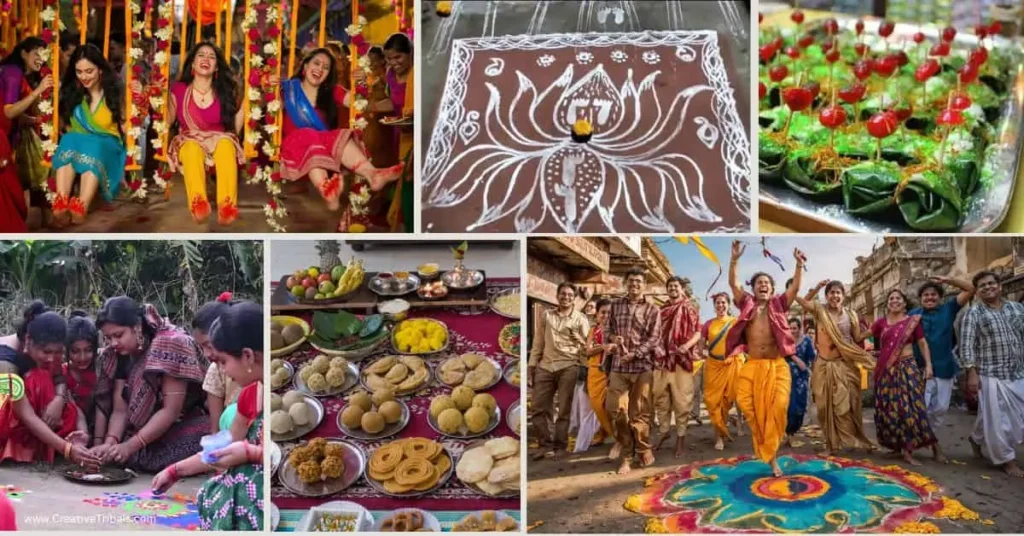






Odisha is renowned for its vibrant culture and festivals. And Odisha’s vibrant culture and historical legacy are on full display during the Raja Festival, a significant celebration that honours fertility and womanhood. This ancient festival has its roots deeply embedded in the state’s history, dating back centuries. The Raja festival emerged from the belief that the Earth, symbolised as a woman, undergoes a period of menstruation during this time and requires rest and revitalisation. The term ‘Raja’ has its origin in the Sanskrit root word ‘Rajaswala’, meaning menstruating. The Raja festival is a celebration of menstruation and is observed in the month of Asadha, which typically falls in the second week of June. It is the beginning of the Solar month ‘Mithuna’ as per the Odia calendar and thus, it is also called ‘Mithuna Sankranti’. Raja is also an agrarian festival, marking the beginning of the agricultural season. The three-day-long Raja Festival is a unique celebration where Mother Earth is believed to be menstruating, and is thus given complete rest. During this period, no agriculture-related work is done, and the land is left untouched, allowing it to rejuvenate and replenish its energies. This festival is observed with great enthusiasm and zeal, showcasing the deep connection between the people and the land they cultivate. The festival is closely linked to the rebirth of the Earth and the renewal of life, as told through mythological tales. Historically, the kings and queens of Odisha played a significant role in celebrating this festival to revitalise both their subjects and the land they ruled over.
Pahili Raja today: Celebrating womanhood in Odisha