






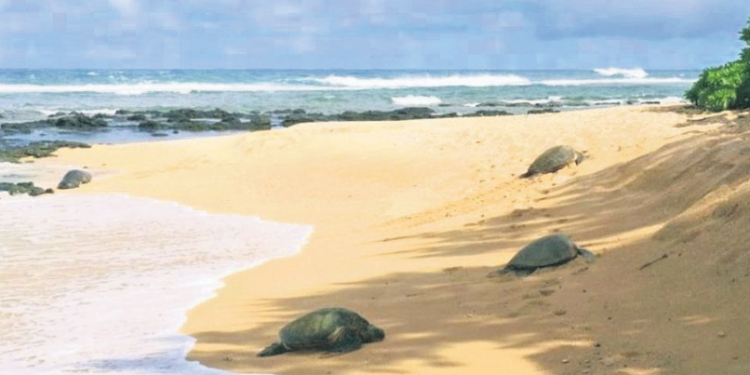
Kendrapara: Climate change is emerging as a major threat to the fragile ecosystem of Bhitarkanika National Park, with unusual migratory bird behaviour and the failure of mass nesting by endangered Olive Ridley turtles raising alarm among environmentalists and forest officials.Experts said rising temperatures, sea-level rise, coastal erosion and changing weather patterns have begun affecting the biodiversity of the ecologically sensitive Ramsar wetland and mangrove region This year, migratory birds left Bhitarkanika much earlier than usual, while more than 6 lakh Olive Ridley sea turtles reportedly returned from the Gahirmatha Marine Sanctuary coast without laying eggs.Environmentalists attributed the changes primarily to global warming, along with marine pollution, excessive shrimp farming and rapid coastal erosion. Hemant Kumar Rout, Anasuya Samal, educationist Bhubanmohan Jena and other environmental experts said climate imbalance was increasingly affecting wildlife behaviour in the region.According to a climate survey conducted in 2023 by the Odisha government in collaboration with the International Climate Initiative and GIZ, the German development agency Deutsche Gesellschaft für Internationale Zusammenarbeit, average temperatures in the Bhitarkanika region, which ranged between 33.5 degrees Celsius and 35.6 degrees Celsius from 1960 to 1990, have shown a steady rise in recent decades.The study also found that sea levels in the region rose by around 7 cm between 2013 and 2023. While monsoon rainfall has remained largely stable, unseasonal cyclonic activity has intensified. During the last winter season, more than 1.5 lakh migratory birds belonging to 117 species arrived at Bhitarkani ka.Normally, the birds remain in the park between November and March, but this year, many reportedly left by the first week of January because of unusually high temperatures. The disruption in the nesting cycle of Olive Ridley turtles has added to concerns.Ga hirmatha is recognised as the world’s largest rookery for the species, listed on the International Union for Conservation of Nature (IUCN) Red List. The turtles usually arrive near the Odisha coast in late November, lay eggs during March and hatchlings enter the sea by early May.However, despite gathering in large numbers this season, the turtles did not lay eggs and returned to the sea. Experts said strong coastal erosion linked to climate change has reduced traditional nesting grounds at Satabhaya, Madali, Babubali and Ekakula.
Large parts of Satabhaya beach have already been submerged over the past two decades, while Agarnasi Island has disappeared into the sea. Forest officials also expressed concern over the ecological imbalance.Manas Das, Assistant Conservator of Forests (ACF) of Rajnagar forest division, said insufficient freshwater inflow during non-monsoon months was affecting both terrestrial and marine wildlife in the Bhitarkanika region.He warned that unless urgent climate adaptation and conservation measures were taken, the long-term survival of the region’s biodiversity could face serious risks