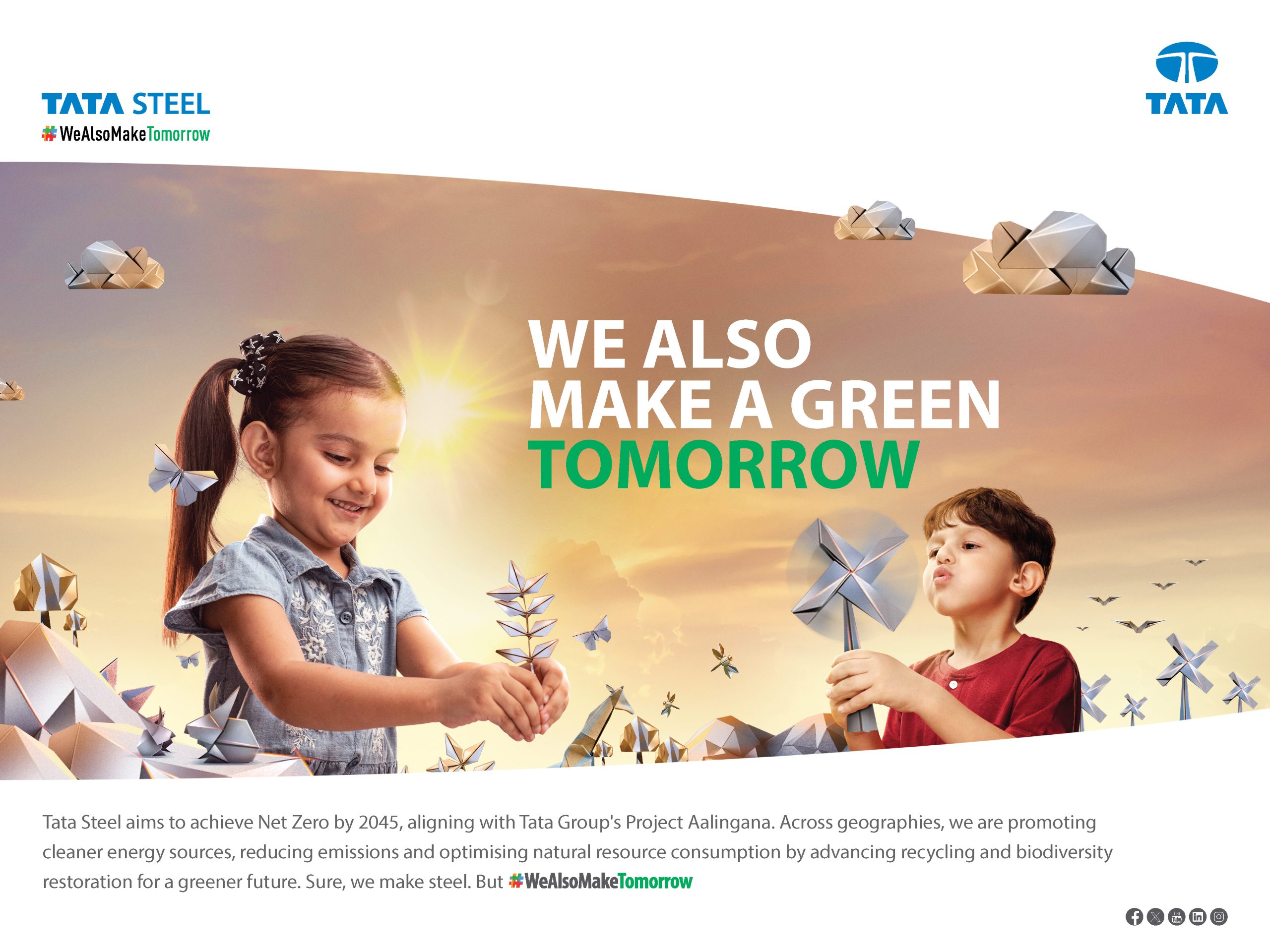






Mumbai,: Tata Steel has teamed up with acclaimed British animator Martyn Pick to create ‘Recycle of Life’, a new film marking the launch of the second phase of its corporate brand campaign, WeAlsoMakeTomorrow. Building on the campaign&39;s first phase, launched in 2018, which focused on how technology and innovation are shaping the future, this new chapter places sustainability at the heart of the narrative. Through its products, solutions and initiatives, Tata Steel is spotlighting the role responsible materials and manufacturing can play in helping build a more sustainable future. At the centre of the campaign is steel&39;s unique ability to be recycled repeatedly without losing its essential properties. Through Recycle of Life, Tata Steel brings this idea to life through children, who represent future generations, and origami-inspired transformations that symbolise continual renewal. As a sheet of steel-textured paper changes form again and
again in the hands of children, the film illustrates how steel can be endlessly reimagined and repurposed. Aligned with Tata Group’s &39;Aalingana&39; initiative, Tata Steel has set an ambitious target of becoming Net Zero by 2045, and has undertaken several initiatives across geographies to achieve this. In India, Tata Steel is advancing scrap-based steelmaking through electric arc furnaces (EAF) in Punjab, and two upcoming facilities in the West and South. In Europe, the Company is transitioning towards a low-carbon future with its 3.2 million tonnes per annum (MTPA) EAF at Port Talbot and the Green Steel Plan in the Netherlands. Tata Steel aims to produce 10-15 million tonnes of steel annually via the recycling route within the next 10-15 years. At its existing blast furnace sites, Tata Steel is piloting breakthrough technologies like HIsarna and EASyMelt while increasing the use of alternative fuels, including biochar and natural gas, to reduce carbon emissions. The Company is also expanding renewable energy integration and increasing scrap utilisation across operations. As part of its circular economy approach, Tata Steel is transforming approximately 15 MTPA of industrial by-products into valuable resources.
Tata Steel brings sustainability to life in Phase 2 of We AlsoMakeTomorrow