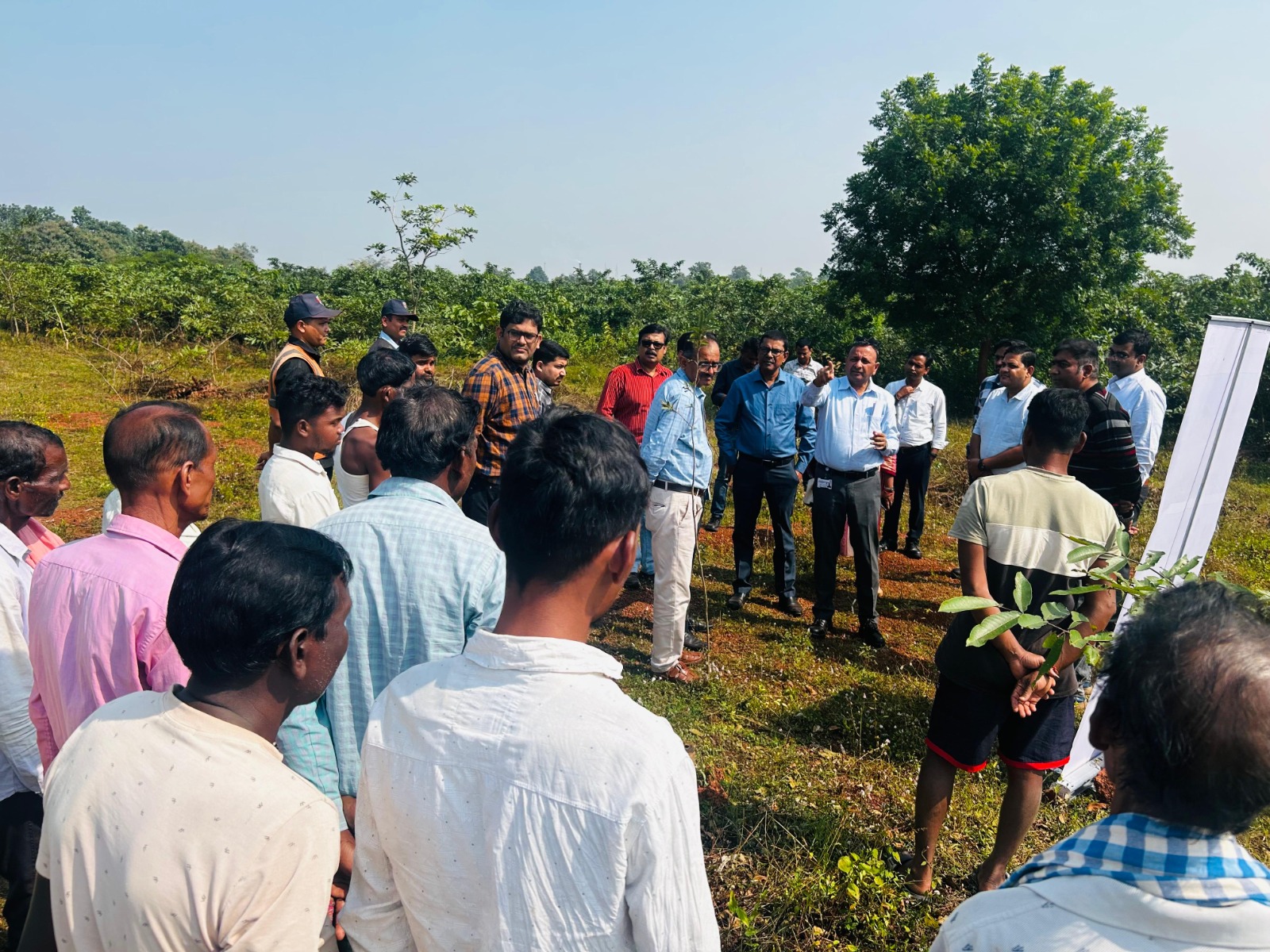






Bhubaneswar, November 27, 2025: The Sukinda Ecorace Conservation Project, led by Tata Steel Foundation in
partnership with the Central Silk Board and Central Tasar Research & Training Institute (CTRTI), is working to revive a
native silkworm species that was on the brink of extinction. The mid-term Self-Assessment Test report conducted by
Tata Steel has been reviewed by IUCN India and found to be in alignment with internationally accepted IUCN Global
Standard on Nature-based Solutions (NbS). The project achieved an assessment score of 60% – well above the 25%
minimum threshold – and earned an "Adequate" rating across all eight assessment criteria.
Rajiv Mangal, Vice President – Safety, Health & Sustainability, Tata Steel, said: “The mid-term assessment review by
IUCN not only validates our commitment to nature-based solutions but also establishes a blueprint for how
corporations can contribute meaningfully to biodiversity conservation. This work demonstrates our alignment to the
Tata group’s Aalingana goals."
D. B. Sundara Ramam, Vice President – Corporate Services, Tata Steel, said: "The Sukinda Ecorace Conservation
Project showcases the convergence of ecological restoration, community empowerment, and economic viability – the
true essence of sustainable development. At Tata Steel, we believe that long-term business success is intrinsically
linked to environmental stewardship and community well-being.”
For generations, the Sukinda Ecorace, a trivoltine Tasar silkworm, thrived in the mixed deciduous forests of Sukinda,
Odisha. But the introduction of commercial strains and habitat loss nearly erased this native species, devastating
traditional livelihoods in the process. To reverse this decline, over 26 hectares of degraded forest land were replanted
with Arjun and Asan trees – the host plants, essential for Tasar silkworms. These restored forests now function as
biodiversity corridors, sequestering carbon while rebuilding the ecosystem that once supported thriving silkworm
populations.
The real innovation lies in the economics. Over 200 households – 50 engaged in plantation activities and 150 in
sericulture – now participate in the project. The initiative directly supports India's Sustainable Development Goals,
particularly SDG 1 (No Poverty), SDG 13 (Climate Action), and SDG 15 (Life on Land). It aligns with the National
Biodiversity Action Plan and demonstrates how conservation and livelihood regeneration can be achieved
simultaneously.
Tata Steel Completes First Nature-based Solutions Assessment Aligned with IUCN Global Standard